
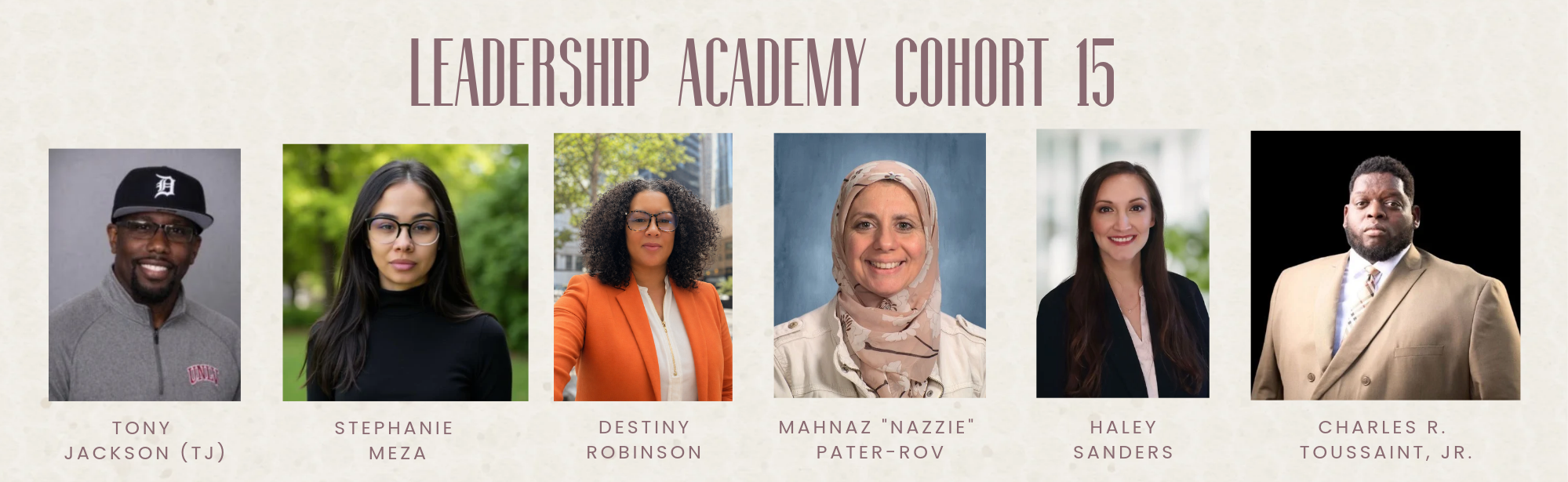
Charles R. Toussaint, Jr., M.Ed., is a doctoral student in Special Education at Texas Woman’s University and serves as the Special Education Coordinator at David W. Carter High School in Dallas Independent School District. With more than a decade of experience in K–12 education, he has served as a special education teacher, instructional leader, and administrator, dedicating his career to advancing equitable educational opportunities for students with disabilities through collaborative leadership and evidence-based practice.
His research explores co-teaching, student engagement, and inclusive instructional practices, with a particular emphasis on improving behavioral, cognitive, and academic engagement for students with disabilities in elementary literacy classrooms. Charles is passionate about bridging the gap between educational research and classroom practice by equipping teachers and school leaders with practical strategies that foster meaningful inclusion and improve student outcomes.
Beyond his work in public education, Charles serves as an Adjunct Instructor at Lesley University, where he prepares future educators through coursework grounded in inclusive and culturally responsive teaching practices. He is also a Board Member for the Texas Chapter of the National Association for Multicultural Education (TXNAME) and serves on the Council for Learning Disabilities Diversity Committee, advocating for equitable educational systems and increased access to high-quality instruction for all learners.
In addition to his educational leadership, Charles serves as a pastor, where he is committed to faith-based leadership, community engagement, and servant ministry. His pastoral calling complements his educational philosophy by emphasizing compassion, service, mentorship, and the development of others. Whether in the classroom, the church, or the community, he strives to lead with integrity, purpose, and a heart for empowering people to reach their fullest potential.
Charles and his wife, Lauren, are the proud parents of three children. Together, they are dedicated to serving their community, investing in the next generation, and living out a shared commitment to faith, family, education, and lifelong learning.
Haley N. Sanders is a middle school special education teacher with nearly 10 years of experience serving students with disabilities. She currently teaches sixth-grade special education and is passionate about implementing evidence-based practices to improve
student outcomes.
Haley is a doctoral student in Auburn University’s Department of Special Education, Rehabilitation, and Counseling, where she also serves as an instructor in the undergraduate course Diversity and Exceptionality of Learners. Her research focuses on
Schema-Based Instruction (SBI) to improve mathematical problem-solving among middle school students with learning disabilities.
In addition to her teaching and research, Haley serves on the Council for Learning Disabilities’ Information Communication Technology Committee and is committed to advancing the field through professional collaboration, leadership, and service. She is
passionate about preparing future special educators, conducting meaningful research, and supporting educators in implementing evidence-based practices that improve outcomes for students with disabilities.
Haley’s long-term goal is to pursue a career in higher education, where she can conduct impactful research, prepare future special educators, mentor emerging professionals, and advocate for equitable, high-quality educational opportunities for students with
disabilities.
Mahnaz “Nazzie” Pater-Rov is an educational diagnostician, Nationally Certified Educational Diagnostician, doctoral student in special education at Texas Woman’s University. Her research interests include evidence-based assessment, specific learning disability identification (SLD), dyslexia evaluation, MTSS/RTI, curriculum-based measurement, data-based individualization, disproportionality, and program evaluation. She has published two studies related to special education assessment: one examining how educational diagnosticians use curriculum-based measurement and another reviewing the literature on evidence-based practices in assessment. She is particularly interested in applying public health frameworks to help evaluators understand assessment as part of a broader system that influences population-level outcomes, not only individual student needs. Through this lens, she hopes to study how assessment practices affect early identification, systems of prevention, access to intervention, equity in eligibility decisions, reduction of disproportionality, and continuous program improvement. Through her audio cast /podcast, Educational Diagnosticians, and professional work, she seeks to make research accessible to practitioners and strengthen connections among assessment, instruction, policy, and implementation. Her dissemination work has been recognized by the IES and the Texas Education Agency for its focus on independent research and evidence-based practices.v
Destiny Robinson, M.Ed., is a third-year doctoral student at the University of Nevada, Las Vegas, and a Secondary Special Education Teacher with a deep passion for advancing educational equity for Black students with disabilities. Her work bridges classroom practice and doctoral research, driven by a commitment to dismantling the systemic barriers that limit
opportunity for Black learners.
Her research centers on the social-emotional experiences of Black high school students receiving special education services for learning and behavioral disabilities. Her work draws on the Black Social-Emotional Learning Framework to move beyond Eurocentric, deficit-based models and instead center Black cultural resilience, healing, and identity restoration. Destiny is particularly focused on disrupting the institutional mechanisms and cultural biases that drive the overrepresentation of Black students in punitive educational settings, and her scholarship has been featured at national and international conferences, including the Council for Exceptional
Children (CEC), the National Association for Multicultural Education (NAME), and the International Conference on Learning Disabilities (CLD).
Destiny’s commitment to leadership and service runs throughout her professional life. She is Liaison Officer for UNLV’s CEC Student Chapter, sits on the Diversity Committee for the Council for Learning Disabilities, and serves as Co-Chair of the Local Planning Committee for the National Association for Multicultural Education (NAME). She was selected to participate in
CLD’s Leadership Institute and was recently selected for CLD’s Brian Bryant Leadership Academy, Cohort 15, a competitive, two-year leadership development program for emerging scholars in the field of learning disabilities. Destiny is a member of the Southern Nevada Black Educators Initiative, and her work is ultimately guided by a deeply personal commitment, informed by her own experience of Black motherhood, to ensure the dignity of every Black learner is recognized and protected.
Stephanie Meza, is a doctoral candidate in Special Education at the University of Nevada, Las Vegas. Her research focuses on the development and implementation of coaching frameworks and models designed to support evidence-based practices, particularly within EBD settings. Her work includes exploring MTSS professional development frameworks that leverage technology
and empowering paraeducators through practice-based coaching. She contributes a valuable perspective shaped by seven years of dedicated service as a special education teacher and behavior coach.
Tony Jackson (TJ) is a doctoral student in Special Education at the University of Nevada, Las Vegas, a licensed special education teacher with the Clark County School District in Las Vegas, Nevada, and a retired U.S. Air Force Master Sergeant with more than 21 years of service. His research focuses on racial disproportionality in special education, Black families’ experiences with behavioral disorder placements, and the institutional practices that influence educational decision-making. Drawing on his lived experiences as a Black man from Detroit, his military leadership background, and his professional practice in self-contained behavioral support classrooms, Jackson is committed to advancing equity through culturally responsive research, family-centered advocacy, and inclusive educational policies and practices.